

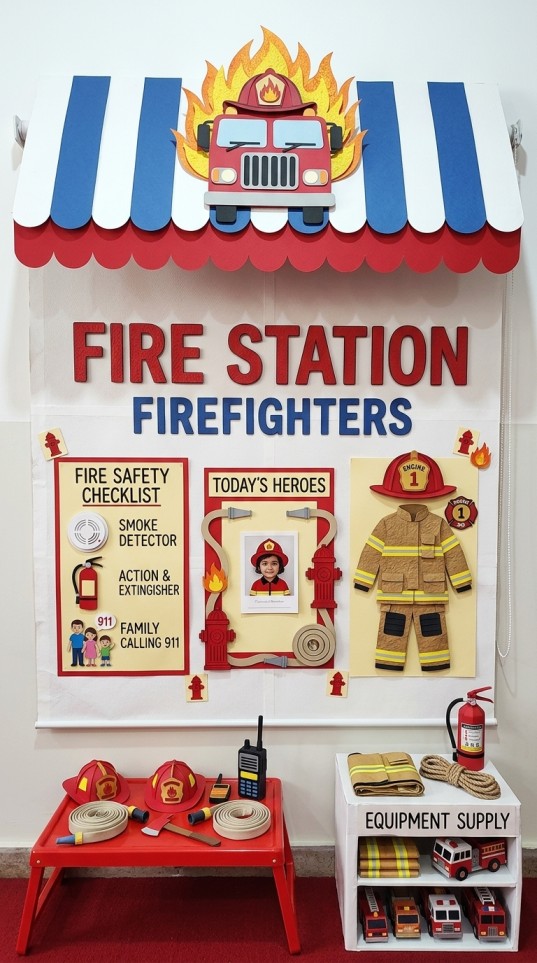
Creating engaging, dramatic play areas is one of the best ways to encourage imagination, communication, and social development in young children. The Fire Station Dramatic Play Center is an exciting theme that allows preschoolers to become brave firefighters, learn about community helpers, and explore important fire safety concepts through hands-on play.
The fire station setup shown in the photo is a great example of how a simple classroom corner can be transformed into an interactive learning environment. With firefighter uniforms, helmets, hoses, toy fire trucks, communication equipment, and fire safety displays, children can step into the role of real firefighters while developing essential early childhood skills.
In this blog post, we will look at the benefits of a preschool fire station dramatic play area, how to set it up, the learning opportunities it provides, and creative activities that can make the experience more meaningful.
Why Create a Fire Station Dramatic Play Center?
Preschoolers learn best through play. Dramatic play gives them opportunities to simulate real-life situations, practice language skills, and work collaboratively with peers.
The Fire Station Dramatic Play Center introduces children to the important role firefighters play in keeping communities safe. It also helps them understand the fundamentals of fire safety in a fun and age-appropriate way.
Some key benefits include:
- Encourages imaginative play.
- Develops communication and vocabulary skills.
- Promotes teamwork and cooperation.
- Introduces helpful community characters.
- Develops problem-solving skills.
- Enhances social and emotional development.
- Teaches basic fire safety awareness.
When children pretend to respond to emergencies, rescue people, and operate fire equipment, they are fully engaged in meaningful learning experiences.
Setting Up a Preschool Fire Station Dramatic Play Area
The dramatic play center in the image includes several creative elements that make the experience realistic and exciting.
1. Fire Station Sign
A large “Fire Station Firefighters” sign instantly transforms the area into a pretend fire station. Decorative flames and fire trucks create visual interest and help children identify with the theme.
Bright red, yellow, and blue colors make the space inviting and capture children’s attention.
2. Fire Safety Display
A wall-mounted fire safety checklist introduces important fire safety concepts such as:
- Smoke detectors
- Fire extinguishers
- Emergency numbers
- Family safety plans
These visual reminders encourage conversations about staying safe during emergencies.
3. Firefighter uniforms
Children love dressing up. Providing firefighter jackets, helmets, badges, and boots helps them fully immerse themselves in their role.
Dress-up clothing also supports:
- Independence skills
- Fine motor development
- Building confidence
- Creative storytelling
4. Emergency Communication Equipment
Toy walkie-talkies or play radios add excitement to the playground.
Kids can communicate with each other like real firefighters:
- Reporting emergencies
- Calling for help
- Coordinating rescue missions
This type of role-play reinforces language and listening skills.
5. Firefighting tools
The center includes realistic props such as:
- Fire hoses
- Axes
- Fire extinguishers
- Safety ropes
These props encourage active role-playing and help children understand how to use firefighting equipment.
6. Fire Truck Collection
Toy fire trucks provide endless opportunities for imaginative play.
Kids can:
- Drive to emergencies.
- Rescue people.
- Pretend to put out fires.
- Transport equipment
Vehicle play also supports storytelling and sequencing skills.
Learning Opportunities in a Fire Station Dramatic Play Center
The Fire Station Dramatic Play Center helps preschoolers learn through imaginative play as they explore the roles of firefighters. As children dress up, pretend emergencies, and work together on rescue missions, they develop language, social, and problem-solving skills. They learn new vocabulary, practice communication, build teamwork, and strengthen fine and gross motor skills through active play.
Dramatic play is more than just a fun classroom activity. It supports learning in multiple developmental areas.
1. Language Development
As children role-play firefighters, they naturally use new vocabulary.
Examples include:
- Firefighter
- Emergency
- Rescue
- Helmet
- Hose
- Firetruck
- Smoke detector
- Extinguisher
Children engage in conversation, give instructions, and make up stories during play.
2. Social Skills
Working together during a rescue mission helps children learn:
- Sharing
- Taking turns
- Collaboration
- Leadership
- Problem solving
They must communicate and cooperate to complete pretend firefighting tasks.
3. Fine Motor Development
Children strengthen their hand muscles when they:
- Fasten jackets
- Put on helmets
- Hold a walkie-talkie
- Handle firefighting equipment
These actions help prepare them for future writing tasks.
4. Gross Motor Development
Firefighter role play encourages movement.
Children can:
- Run to an emergency
- Crawl under obstacles
- Carry supplies
- Climb through pretend rescue areas
Physical activity supports coordination and physical awareness.
5. Emotional Development
Pretending to help others gives children opportunities to demonstrate empathy and kindness.
They learn how community helpers help people in difficult situations and begin to understand the value of helping others.
Teaching Fire Safety Through Play
This dramatic play center is also a great way to introduce important fire safety concepts. Kids can learn about smoke detectors, emergency services, firefighter equipment, and simple safety rules. Activities like practicing “stop, drop, and roll” and discussing fire safety at home help kids understand how to stay safe in a fun and engaging way.
Incorporating Firefighter Role-Play Activities
Children can take on roles such as firefighters, dispatch operators, or rescue team members. Exciting activities like responding to emergency calls, rescuing stuffed animals, putting out pretend fires, and conducting safety inspections encourage creativity, teamwork, and imaginative learning while making the experience fun and educational.
Conclusion
The fire station dramatic play idea for preschoolers is a fun way to combine imaginative play with meaningful learning. By providing firefighter costumes, rescue equipment, a toy fire truck, and fire safety materials, teachers can create an engaging environment where children learn through experiences.
This type of dramatic play center encourages language development, social skills, problem-solving, creativity, and fire safety awareness while keeping children actively engaged. Whether used during a Community Helpers unit, a fire safety theme, or simply as part of a dramatic play rotation, the Preschool Fire Station encourages children to explore the important role firefighters play in our communities.
Most importantly, it allows young learners to become everyday heroes through the power of imaginative play.