

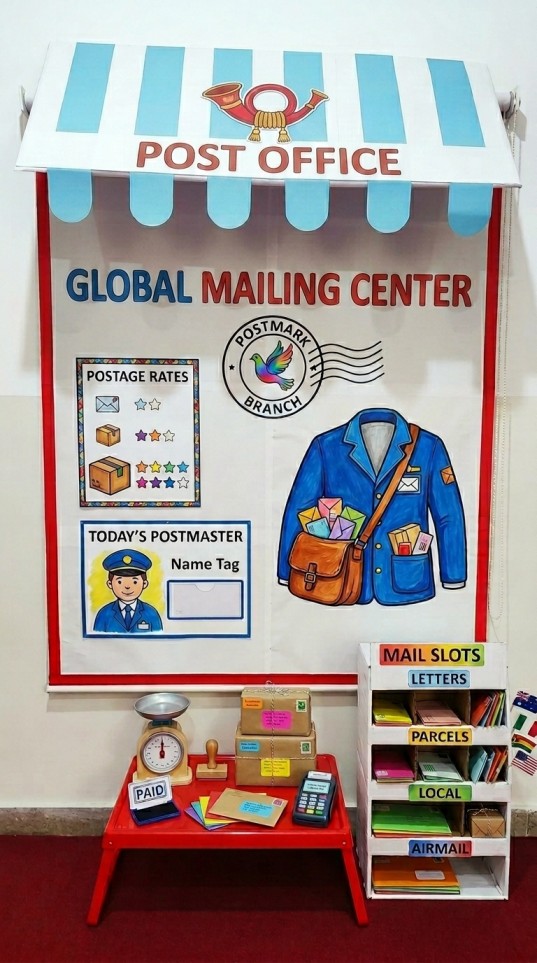
Dramatic play is one of the most valuable learning experiences in early childhood education. It allows preschoolers to explore the world around them through imagination, communication, and hands-on activities. A fun and educational dramatic play center that kids love is the Post Office Dramatic Play Area. This setup transforms a corner of the classroom into a busy post office where kids can become postal workers, mail carriers, customers, and package handlers.
The Post Office Dramatic Play Idea for Preschoolers encourages literacy, social interaction, problem-solving, and fine motor development while making learning fun and engaging. Whether you’re a preschool teacher, daycare provider, or homeschooling parent, this dramatic play theme can provide endless opportunities for creative learning.
Why Choose a Post Office Dramatic Play Center?
Children are naturally curious about how mail travels from one place to another. They see letters, greeting cards, and packages arriving at their homes, but are often surprised by how the process works. A post office dramatic play center helps them find answers to these questions hands-on.
Through pretend play, children learn about:
- Community Helpers
- Communication and Letter Writing
- Sorting and Organizing
- Counting and Matching
- Social Skills and Teamwork
- Responsibility and Cooperation
This theme also introduces children to simple and age-appropriate real-world experiences.
Benefits of Post Office Dramatic Play for Preschoolers
1. Encourages Early Literacy Skills
The post office setup naturally promotes reading and writing. Children can write letters, make postcards, address envelopes, and recognize names.
Literacy activities can include:
- Writing simple messages
- Recognizing letters in names
- Matching names to mailboxes
- Recognizing labels and signs
- Pretending to read delivery lists.
These activities help children understand that print has meaning and a purpose.
2. Builds Social and Communication Skills
Dramatic play encourages children to talk, listen, and interact with each other. They learn how to greet customers, ask questions, and work together.
Children can practice phrases like:
- “How can I help you?”
- “Would you like to send a letter?”
- “Here’s your package.”
- “Thanks for coming to the post office.”
This conversation helps build confidence and language.
3. Supports Fine Motor Development
Many post office tasks require small hand movements that strengthen fine motor skills.
Examples include:
- Folding paper
- Sealing envelopes
- Stamping letters
- Sorting mail
- Writing names
- Packing boxes
These activities help prepare children for future writing tasks.
4. Teaches Problem-Solving Skills
Children face challenges during play and learn how to solve them independently.
For example:
- Sorting letters into the correct mailbox
- Delivering mail to the correct classroom address
- Matching names with envelopes
- Sorting packages by size
These tasks encourage critical thinking and decision-making.
Setting Up a Preschool Post Office Dramatic Play Area
A post office dramatic play center can be created using simple classroom supplies and recycled materials. The goal is to create an inviting space where children can explore the process of mailing, sorting, and delivering letters through imaginative play.
Create an Eye-Catching Post Office Sign
Start by designing a large “Preschool Post Office” sign to define the play area. Decorate it with mail-themed visuals such as envelopes, stamps, mailboxes, postcards, and delivery trucks. The colorful sign helps children immediately recognize the theme and encourages them to participate in role-play activities.
Set up a service counter.
Use a small table as the main service counter where children can interact as postal workers and customers. This area becomes a hub of activity as children accept mail, sort letters, assist customers, and process packages. Adding simple props like a toy cash register or a clipboard can make the experience feel more realistic.
Create Individual Mailboxes
Provide each child with a personal mailbox made from shoe boxes, tissue boxes, or small storage containers. Label each mailbox with the child’s name and picture. Personal mailboxes encourage name recognition, responsibility, and motivation as children receive letters from classmates.
Organize a delivery station.
Designate an area for sorting and preparing outgoing mail. Baskets, trays, mail bags, and storage bins can be used to organize letters and packages before delivery. This station helps children develop organizational skills and learn how mail moves through the postal system.
Materials Needed for a Post Office Dramatic Play Center
Simple materials can transform a classroom into a busy post office. Most items can be found in the classroom or collected from recycled household items.
Writing Supplies
Provide materials that encourage children to create messages and letters.
- Paper
- Notepads
- Markers
- Pencils
- Crayons
Mail Supplies
Include realistic mail items that children can use during play.
- Envelopes
- Greeting Cards
- Postcards
- Stickers
- Labels
Delivery Supplies
These materials help children transport and organize mail.
- Mailbags
- Toy Cars
- Baskets
- Delivery Boxes
Displaying Post Office Equipment
Realistic tools make the role more engaging and meaningful.
- Toy Scales
- Stamp Pads
- Name Tags
- Toy Phones
- Clipboards
Dress-up Props
Dress-up items help kids fully immerse themselves in their role.
- Mail Carrier Hats
- Uniform Vests
- Delivery Badges
Roles Children Can Play
Assigning different roles keeps kids engaged and allows them to experience different responsibilities within the post office.
Postal Worker
Postal workers manage the day-to-day operations of the post office. Kids can assist customers, sort mail, organize letters, and prepare items for delivery while practicing communication and problem-solving skills.
Mail Carrier
Mail carriers deliver letters and packages throughout the classroom. This role encourages movement, responsibility, and name recognition as kids ensure that each item reaches the correct mailbox.
Customer
Customers write letters, buy stamps, and mail packages. This role allows children to practice social interaction and understand how postal services work from a customer’s perspective.
Package Handler
Package handlers sort and organize boxes before delivery. Children learn sorting, matching, and organizational skills while preparing packages for transportation.
Fun Post Office Dramatic Play Activities
Incorporating structured activities makes a dramatic play center fun and educational.
Letter Writing Station
A letter-writing area encourages children to create messages, draw pictures, and write notes to friends and family. This activity supports early literacy skills and creativity.
Mail Delivery Game
Children deliver letters to classmates’ mailboxes, helping them develop responsibility, matching skills, and name recognition in a fun and meaningful way.
Stamp Printing Activity
Children can make and use pretend stamps to decorate envelopes and postcards. This hands-on activity encourages creativity while strengthening fine motor skills.
Package Sorting Challenge
Provide children with boxes of different sizes and labels to sort. This activity introduces early math concepts such as sorting, comparing, and grouping.
Special Delivery Mission
Create delivery routes around the classroom where children must deliver mail to specific locations. This activity combines movement, problem-solving, and imaginative play.
This format looks more professional in a blog post because the titles provide clarity, while the bullet points remain concise and easy to read.
Final Thoughts
The Post Office Dramatic Play Idea for Preschoolers is a wonderful way to combine learning and fun. Through role-play, children develop literacy, math, communication, social, and fine motor skills while exploring an important community service. The setup is simple, affordable, and highly engaging, making it a great addition to any preschool classroom.
Whether children are sorting letters, delivering packages, or assisting customers at the service counter, they are building valuable life skills through meaningful play. By creating a Post Office Dramatic Play Center, teachers can provide a rich learning experience that encourages imagination, teamwork, and a deeper understanding of the world around them.