
The grocery store ‘dramatic play’ center is one of the most engaging and captivating educational experiences created for preschoolers. It transforms an ordinary classroom corner into a colorful, make-believe market where children take on roles such as shoppers, cashiers, stock clerks, and store managers. Through imaginative role-play, children learn and develop essential life skills while enjoying a realistic shopping environment.
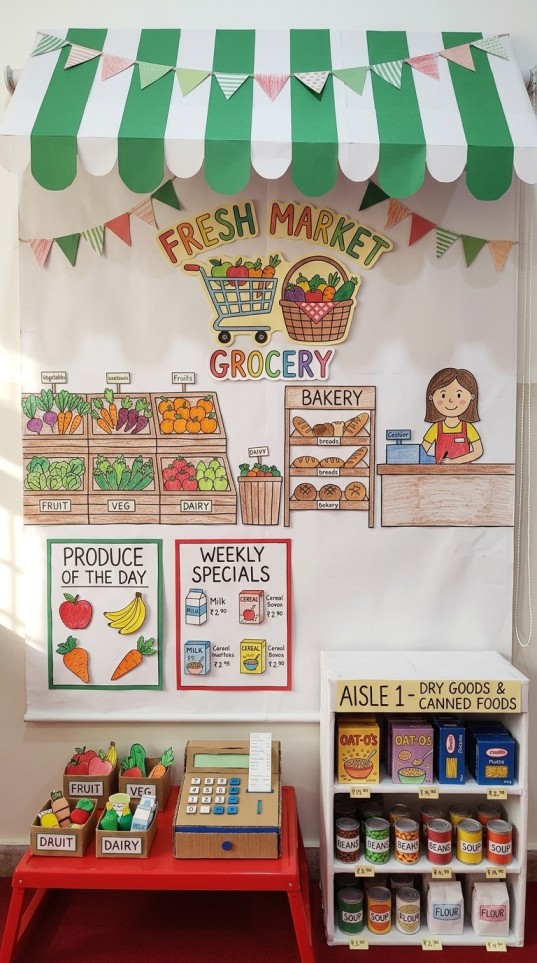
The grocery store setup shown above is bright, inviting, and thoughtfully organized. Featuring a “Fresh Market” sign, colorful produce displays, bakery shelves, grocery aisles, a pretend cash register, and shopping items, it creates an engaging environment that encourages children to explore, interact, and learn through play.
Whether you are teaching themes related to community helpers, healthy eating, or life skills, the grocery store dramatic play center offers endless opportunities for meaningful learning.
Why Create a Grocery Store Dramatic Play Center?
Dramatic play allows children to mimic everyday experiences they observe in real life. A visit to the grocery store is something most preschoolers are familiar with, making it an ideal classroom theme. As they pretend to shop, organize products, and check out customers, they naturally develop communication skills, creativity, and confidence.
This type of learning center introduces children to fundamental financial concepts, healthy food choices, and social interaction. Instead of learning through worksheets, they acquire knowledge through hands-on experiences that feel both exciting and purposeful.
Setting Up a Grocery Store Dramatic Play Center
The classroom setup in the image is designed to resemble a real grocery store while remaining simple enough for preschoolers to use independently.
This center features a large “Fresh Market” grocery sign that instantly captures children’s attention. Decorative bunting and a green-and-white market awning give the space the look of a neighborhood produce shop. Wooden-style displays stocked with fruits, vegetables, dairy products, and bakery items make the setting feel realistic and inviting.
A pretend checkout counter, complete with a friendly shopkeeper, encourages role-play between shoppers and cashiers, while colorful posters displaying “Produce of the Day” and “Weekly Specials” introduce children to grocery store advertising. A grocery shelf stocked with canned goods, cereal boxes, flour, soup, and dry goods helps children practice sorting, selecting, and arranging products—just like in a real supermarket.
Including a toy cash register, shopping baskets, reusable grocery bags, play money, and shopping lists can make the experience even more interactive.
Learning Opportunities in a Grocery Store Dramatic Play Center
A grocery store dramatic play center fosters learning across various developmental areas while keeping children actively engaged. As they assume different roles, they build language skills by learning new vocabulary related to shopping, food, and money. Interactions between customers and cashiers encourage children to ask questions, give instructions, and practice polite manners—such as saying “please,” “thank you,” and “have a nice day.”
This center also strengthens social skills as children learn to take turns, share materials, cooperate with classmates, and solve simple problems together. Fine motor skills improve as they pick up grocery items, press buttons on the cash register, scan products, and organize shelves. At the same time, children develop early math skills by counting items, recognizing numbers, comparing quantities, and engaging in pretend play involving payment for groceries.
Most importantly, this dramatic play experience fosters independence, creativity, and confidence as children explore real-world situations through imaginative play.
Teaching Healthy Eating Through Play
A grocery store theme offers a wonderful opportunity to introduce healthy food choices. While pretending to shop, children can learn to identify fruits, vegetables, dairy products, grains, and other food groups. Teachers can discuss the importance of eating colorful fruits and vegetables, selecting nutritious snacks, and creating balanced meals.
Simple activities—such as sorting healthy versus unhealthy foods, filling a shopping basket with nutritious items, or discussing the “produce of the day”—help enjoyably reinforce healthy eating habits.
Creative Grocery Store Role-Play Activities
One of the best aspects of a grocery store dramatic play center is the variety of imaginative activities children can enjoy. Some children can act as cashiers, while others shop for groceries using pretend shopping lists. They can stock shelves, arrange fruits and vegetables, organize bakery items, or help customers find products around the store.
Teachers can introduce fun challenges, such as finding all the red fruits, shopping for ingredients to make a sandwich, or filling a basket with five healthy food items. Children can also practice weighing produce, packing grocery bags, and handing out receipts after each purchase. These simple role-play scenarios keep the learning center exciting and encourage creativity every day.
Materials Needed for a Grocery Store Dramatic Play Center
You do not need expensive materials to set up a grocery store. Many props can be created using recycled boxes and craft supplies.
Some useful items include:
- Toy fruits and vegetables
- Empty cereal boxes
- Milk cartons
- Soup and food cans
- Bakery items
- Grocery shelves
- Toy shopping baskets
- Cash register
- Play money
- Shopping bags
- Shopping lists
- Price tags
- Product labels
- Store signs
- Aprons or cashier badges
These simple materials help create an authentic shopping experience that children will enjoy.
Tips for Making the Center More Interactive
To keep the children engaged, rotate the products and introduce seasonal themes throughout the year. During autumn, include pumpkins and apples; in winter, showcase holiday items. Spring can feature fresh fruits and vegetables, while summer might include picnic foods and refreshing beverages.
Teachers can also introduce weekly shopping challenges, designate special sale days, or invite children to help restock the shelves. Allowing children to create their own grocery advertisements or price tags fosters a sense of ownership over the learning center and encourages creativity.
Keeping the shelves neat, clearly labeled, and easy to reach helps children play independently while building organizational skills.
Benefits of Grocery Store Dramatic Play
A grocery store ‘dramatic play’ center offers far more than just imaginative fun; it helps foster communication, social interaction, early math and literacy skills, organizational abilities, awareness of healthy eating, creativity, and problem-solving skills in children. Since the activities mirror real-life experiences, children remain excited and eager to participate.
This type of dramatic play also builds confidence, as children learn to make decisions, interact with others, and perform everyday tasks independently. Through pretend shopping, they acquire valuable life skills that extend well beyond the confines of the classroom.
Conclusion
A grocery store dramatic play center is a wonderful addition to any preschool classroom. With colorful food displays, grocery shelves, bakery items, shopping baskets, and a pretend checkout counter, children are encouraged to explore, imagine, and learn through meaningful play.
This engaging learning center supports language development, social skills, early math, literacy, healthy eating habits, and creativity, while helping children understand how a grocery store operates. Whether used as part of a “community helpers” unit, a healthy eating theme, or for everyday dramatic play, a grocery store sparks curiosity and makes learning both fun and memorable.