

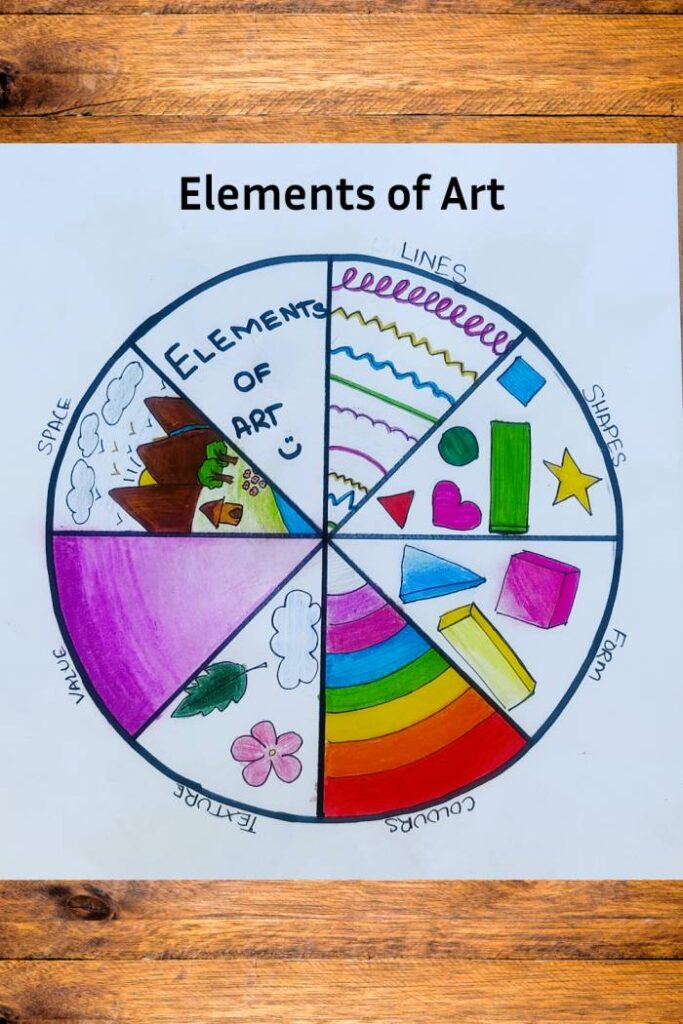
The “Elements of Art Wheel” is a creative, hands-on resource designed to help students understand and remember the seven fundamental elements of art. Instead of learning art terminology solely through definitions, students can explore each concept through drawing, designing, coloring, and visual examples.
For art teachers, introducing the elements of art can sometimes feel challenging, as concepts such as value, texture, form, and space may seem abstract to students. A visual activity like the “Elements of Art Wheel” can make these concepts easier to grasp and retain.
This interactive art worksheet offers students the opportunity to explore the seven elements of art in an organized and enjoyable way. Each section of the wheel focuses on a key element: line, shape, form, color, value, texture, and space.
Whether you are teaching elementary or middle school art, or simply looking for an activity focused on art vocabulary, these “Elements of Art” worksheets can be a valuable addition to your lessons. Students can create their own designs, practice coloring, and use the completed wheel as a visual reference while working on their artwork.
What Are the Seven Elements of Art?
Before starting work on the worksheets, it is useful for students to review the seven elements of art. These elements are the fundamental components of visual creation that artists use to produce artworks.
Understanding these concepts provides students with a foundation for discussing and analyzing art, as well as for creating their own artworks. A simple explanation of each element is provided below.
1. Line
Line is one of the most fundamental elements of art. It is a mark that connects one point to another and can be straight, curved, wavy, zigzag, thick, thin, horizontal, or vertical.
Artists use various types of lines to create shapes, patterns, movement, and visual interest. For example, a curved line can evoke a sense of movement, while straight lines can make an artwork appear more structured.
Students can experiment with creating interesting patterns and designs by repeatedly drawing different types of lines and combining them.
2. Shape
A shape is a two-dimensional area enclosed by lines or boundaries. Common geometric shapes include circles, squares, rectangles, triangles, and ovals.
Shapes can also be organic, meaning they have irregular or natural forms. Leaves, clouds, piles, and many other things found in nature can inspire organic shapes.
Learning about shapes helps students understand how artists organize objects and create compositions.
3. Form
“Form” refers to objects that appear three-dimensional, possessing height, width, and depth. Cubes, spheres, cylinders, cones, and pyramids are examples of geometric forms.
Unlike flat shapes, “form” gives an artwork a sense of depth and dimension. Artists can use shading, highlights, perspective, and value to transform a two-dimensional drawing into a three-dimensional one.
For younger students, comparing a circle to a sphere or a square to a cube can be a simple way to introduce the distinction between shape and form.
4. Color
Color is one of the most prominent elements of art. Artists use color to create atmosphere or mood, highlight key areas, express ideas, and make the artwork visually appealing.
By exploring the relationships between colors, students can learn about primary, secondary, and tertiary colors. They can also experiment with warm and cool colors and discover how different color combinations alter the overall impression of an artwork.
Understanding and experimenting with color through hands-on activities is particularly enjoyable, as students can immediately see the impact their chosen colors have on the overall design.
5. Value
‘Value’ refers to how light or dark a color or tone appears. It helps artists create contrast, depth, highlights, and shadows.
For example, a single color can have various values. Mixing white can make the color lighter, while mixing black can make it darker.
Understanding value is a crucial part of drawing and painting, as it helps students render objects in a more realistic and three-dimensional way.
6. Texture
It describes how a surface looks or feels. Texture can be tactile—meaning it can be touched—or visual, where an artist creates the appearance of texture using lines, patterns, colors, or shading.
Students can identify textures such as rough, smooth, soft, bumpy, shiny, or fuzzy. They can then experiment with drawing patterns that make a flat surface appear textured.
Texture is a wonderful element that encourages students to observe the world around them and translate what they see into artwork.
7. Space
In art, “space” refers to the area around, between, inside, or occupied by objects. Artists use space to create depth, distance, perspective, and balance.
Students can explore positive space—the area occupied by objects—and negative space, which is the empty area surrounding those objects.
Understanding space can help students arrange objects more effectively and create artwork that feels balanced and organized.
Explore the Elements of Art Through a Vocabulary Wheel
The ‘Elements of Art Vocabulary Wheel’ combines the learning of these seven concepts into a single visual activity. Instead of merely presenting the terms as a simple list, the wheel offers students the opportunity to engage creatively with each element.
Each section of the wheel represents one of the seven elements of art. Through drawing and coloring, students can create visual examples that illustrate these terms.
This makes the activity useful for both art education and creative expression.
Teachers can introduce these seven elements before starting the activity, or use the ‘wheel’ for review and reinforcement after the students have learned the concepts.
Worksheet 1: Create Your Art Wheel
The first worksheet features an outline of the ‘Elements of Art Wheel,’ with its various sections identifying the seven elements of art.
Students are encouraged to create their own designs representing each element. Instead of simply copying definitions, they can consider what each art concept looks like and create a visual example of it.
For example, students might:
- Draw various types of lines in the line section.
- Create geometric or organic shapes.
- Draw three-dimensional objects to represent form.
- Experiment with different colors in the color section.
- Create shading ranging from light to dark to demonstrate value.
- Create patterns that represent different surface textures.
- Depict objects and empty spaces to demonstrate the use of space.
Download Worksheet (PDF)
This hands-on activity encourages students to think creatively and strengthens their understanding of art terminology. It can also help teachers quickly identify which concepts students grasp well and which ones may require further explanation.
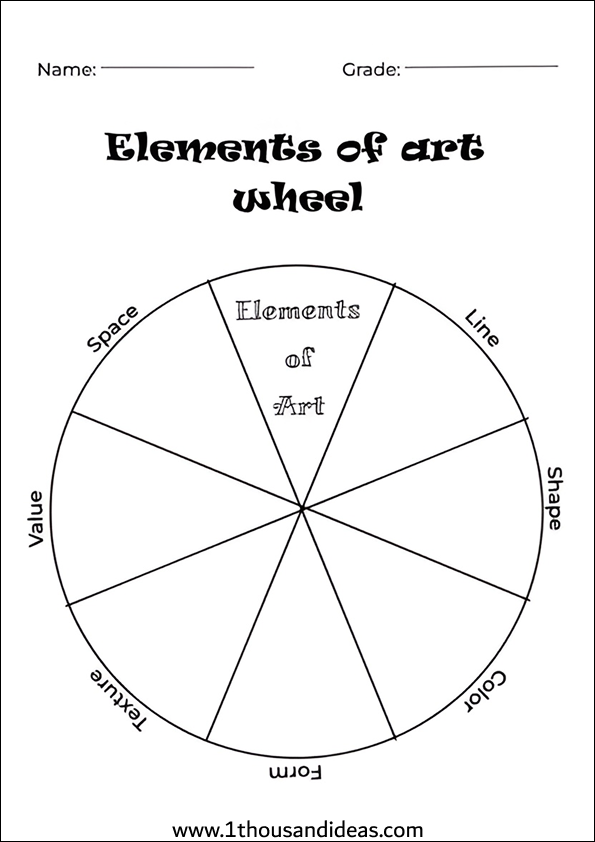
Worksheet 2: Color and Explore the Elements
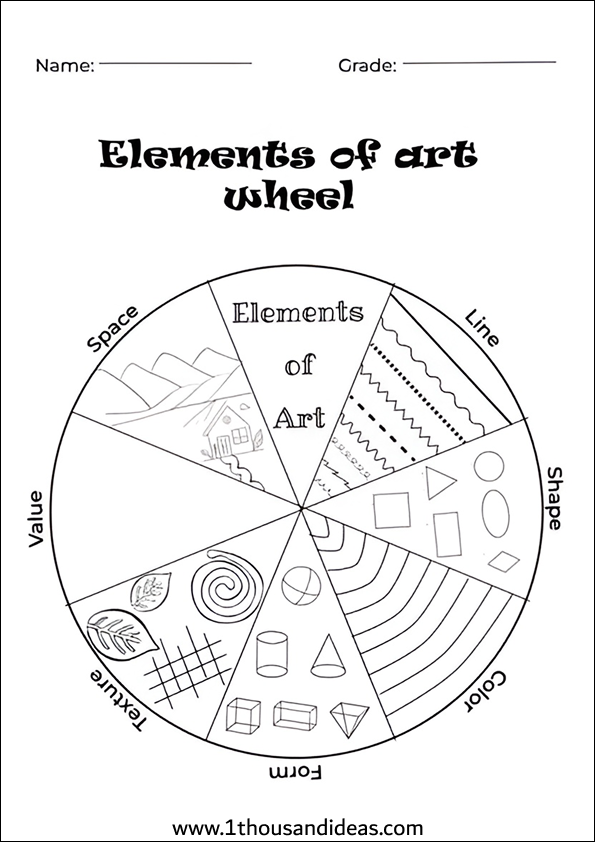
The second worksheet provides students with a more guided version of the activity. Seven elements are already represented on the wheel, allowing students to focus on coloring, observation, and reviewing concepts.
This worksheet is particularly useful for students who may require more visual guidance.
As students color each section, teachers can discuss the element depicted in that part of the wheel. For example, while working on the “value” section, students can discuss light and dark tones; while coloring the “color” section, they can discuss primary and secondary colors.
Download Worksheet (PDF)
Coloring the elements of the art wheel can turn a vocabulary review into a fun classroom activity. Students can also compare their finished wheels and discuss how different color choices can alter the appearance of the design.
Why Use the Elements of Art Vocabulary Wheel?
This Elements of Art vocabulary wheel is a great way to teach your students basic art concepts in an organized and fun way. By completing these worksheets, students gain experience applying the elements of art to their creations, which helps strengthen their artistic skills and creative thinking.
The wheel also helps students visualize how each element in the artwork works, turning abstract concepts into concrete and understandable ideas.
Benefits of the Art Wheel Worksheets
- Engagement: The hands-on activities encourage students to engage with the material actively.
- Creativity: Students are encouraged to express themselves through design and coloring.
- Understanding: The worksheets guide students through each element of art, enhancing their comprehension.
- Fun Learning: The colorful and interactive nature of the worksheets makes learning enjoyable.
Ideas for Extending the Activity
Once students understand the seven elements, you can take the lesson a step further.
Ask students to select an artwork and identify the elements they can see in it. For example, they can identify various types of lines, shapes, colors, textures, values, and areas of space.
Another option is to give students a simple drawing assignment and ask them to intentionally incorporate at least three elements of art.
For more advanced students, challenge them to use all seven elements of art in a single composition.
You can also turn the activity into a classroom discussion by asking questions such as:
- Which element do you notice first in the artwork?
- How does color alter the mood of the artwork?
- How can value make an object appear three-dimensional?
- Where can you find texture in everyday objects?
- How does an artist use space to convey distance?
- What different types of lines can you find in a painting?
- How do shape and form differ?
These questions encourage students to move beyond memorizing definitions and start thinking like artists.
Final Thoughts
The Elements of Art Vocabulary Wheel is a simple and creative resource for introducing and reviewing the seven elements of art. Through drawing, designing, coloring, and visual exploration, students can develop a strong understanding of line, shape, form, color, value, texture, and space.
Two worksheets offer varying levels of engagement: students can create their own art wheel, color in a guided version, and use the completed wheel as a visual reference.
Whether you are planning an introductory art lesson, reviewing vocabulary, preparing an activity for early finishers, or setting up a classroom display, these ‘Elements of Art’ worksheets can make learning art concepts more engaging.
Encourage your students to explore each element, experiment with their ideas, and discover how these fundamental components come together to create unique and expressive artworks.
Download the ‘Elements of Art’ Vocabulary Wheel worksheets and offer your students a fun, creative way to learn the seven elements of art!



Pingback: Mother's Day Foldable Card Template (Free Printable) - 1thousandideas
Regards for this post, I am a big fan of this web site would like to proceed updated.
Thanks for your kind words. We’ll keep sharing more updates!