

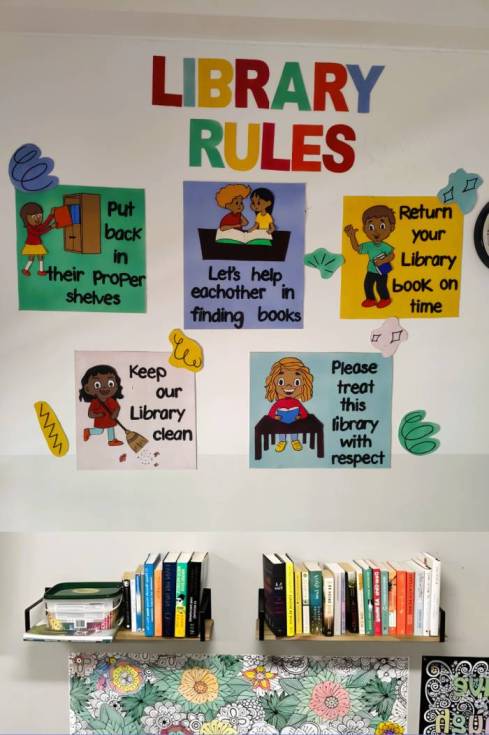
A school library is far more than just a room filled with books; it is a place where children discover new ideas, cultivate a love for reading, expand their imaginations, and learn to become responsible members of society. Clear library rules help establish a pleasant and organized environment where students can study undisturbed, respect shared resources, and adopt responsible habits. A pleasant library atmosphere—supported by simple rules—can encourage students to study more and take better care of shared books and resources.
One simple way to create such an environment is to prominently display clear and engaging library rules for students.
Library rules do not have to be boring or overly formal. Colorful, handmade posters can transform simple guidelines into eye-catching decorations that capture students’ attention and help them remember the rules. They also add a personal and creative touch to the school library.
In our school library, we created a set of handmade posters based on five simple rules: taking care of books, helping others, returning books on time, keeping the library tidy, and respecting the library.
Why Library Rules Are Important
Before introducing specific rules, it is helpful for students to understand why library rules are important.
The library is a shared space. Many students may use the same books, furniture, shelves, and educational materials daily. Without simple guidelines, books could be misplaced or damaged, the library could become disorganized, and it might become difficult for other students to study in peace.
Prominently displayed library rules help children understand the impact their behavior has on other readers.
Following library rules can help students:
- Keep the library organized and welcoming.
- Take responsibility for shared books and resources.
- Develop good reading habits.
- Respect other students and library staff.
- Learn how to care for books properly.
- Become more responsible when borrowing materials.
- Practice teamwork and cooperation.
- Enjoy a peaceful environment for reading and learning.
Instead of presenting rules merely as restrictions, teachers can frame them as positive habits that help everyone enjoy the library.
Handmade Library Rules Posters for a School Library
Our handmade library rule posters aim to highlight key guidelines while adding a touch of color and creativity to the library walls.
Each poster focuses on a single, simple rule. The text is concise enough for students to grasp instantly, while the handmade design makes the display visually engaging.
Here are five simple library rules that you can use in your school library.
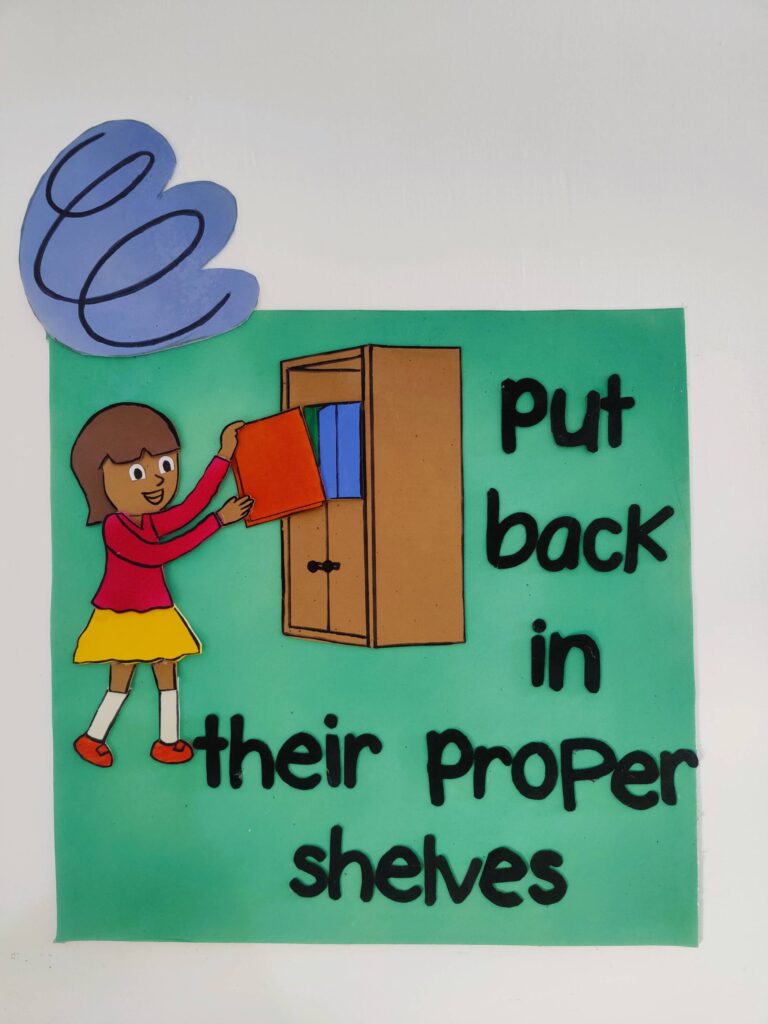
1. Put Back Books in Their Proper Shelves:
One of the most important rules of the school library is that books must be returned to their proper place after being read or looked at.
Students often pull several books from various shelves while searching for something interesting. If these books are left on tables or placed haphazardly on the shelves, it becomes difficult for other students to find them.
Encouraging children to return books correctly helps keep the library organized.
You can explain this rule to younger students in simple terms:
“If you take a book from the shelf, please put it back exactly where you found it.”
Teachers can also demonstrate how books are arranged and explain why each book has a specific place.
For younger children, a librarian or teacher can make the process more interactive by showing them how to match books with the corresponding shelf labels.
Why This Rule Matters
Returning books to their designated places (shelves):
- Keeps the library system organized.
- Makes it easier to locate books.
- Saves students’ time.
- Helps protect books from unnecessary damage.
- Fosters a sense of responsibility in children.
- Encourages students to take care of shared resources.
A colorful, handmade poster placed near the bookshelves can serve as a friendly reminder for students who have finished reading.
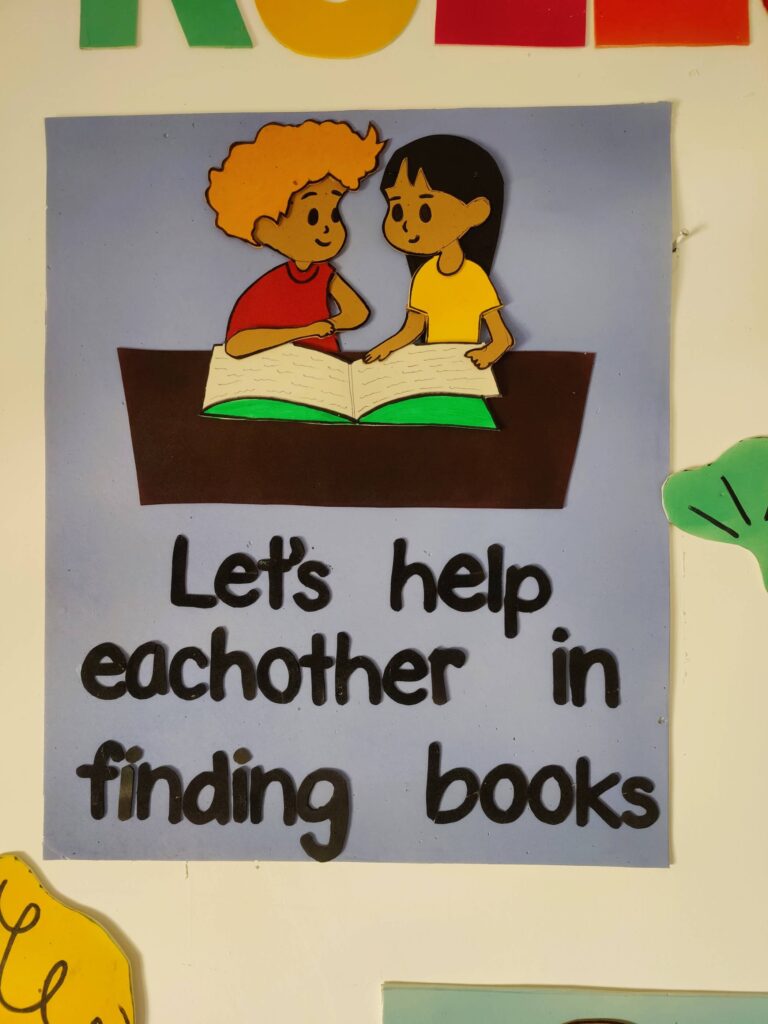
2. Let’s Help Each Other in Finding Books
A library should be a place where students feel comfortable and at ease asking questions and helping one another.
Some children might immediately know where to find their favorite books, while others may need assistance. Encouraging students to help their classmates can foster a friendly and collaborative atmosphere in the library.
Instead of ignoring someone who is having trouble finding a book, students can offer to help.
A simple phrase such as:
“Can I help you find your book?”
This can encourage kindness and cooperation.
This approach is particularly useful for younger students who are just learning how the library system is organized.
Teachers can also turn this into a brief library activity. Ask students to work in pairs and assist each other in locating books using shelf labels, categories, authors, or visual cues.
Why This Rule Matters
Helping others in the library fosters the following:
- Teamwork (working together).
- Kindness.
- Interpersonal connection.
- Confidence.
- Cooperation.
- Positive social interaction.
It also helps students understand that the library is a shared space for learning, rather than just a place to sit and study in isolation.
A handmade poster depicting children helping one another find books can further reinforce this positive message.
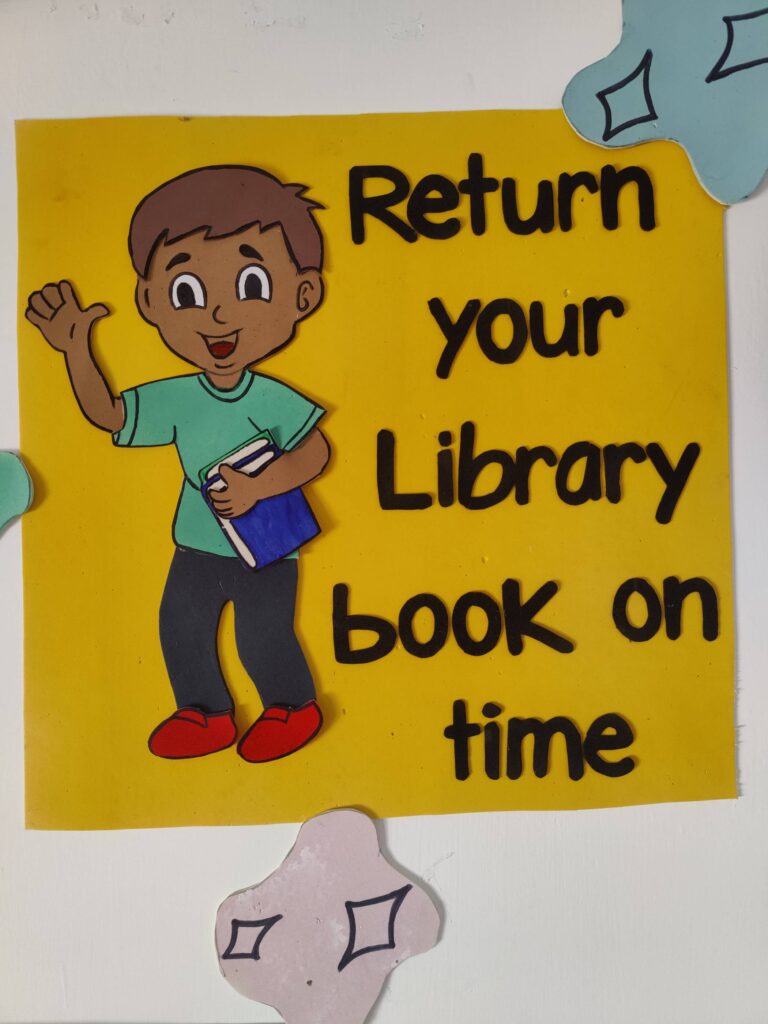
3. Return Your Library Book on Time:
Books in the school library are a shared resource. When a student borrows a book, another student might be waiting for the opportunity to read it.
Therefore, returning library books on time is an important responsibility.
Students should learn to check the due date and ensure that borrowed books are returned by the scheduled time.
For younger children, teachers can make this rule easier to understand through the following explanation:
“When you have finished reading your book, please bring it back so that another friend can enjoy it too.”
This positive approach helps children understand that the purpose of returning a book is not merely to adhere to a deadline, but also to be considerate of other readers.
Why This Rule Matters
Returning books on time:
- Provides other students with access to popular books.
- Fosters a sense of responsibility.
- Prevents the issue of leaving books at home.
- Helps librarians manage the book collection.
- Cultivates good habits of organization.
A cheerful, handmade poster can present this rule as a friendly reminder rather than a strict directive.
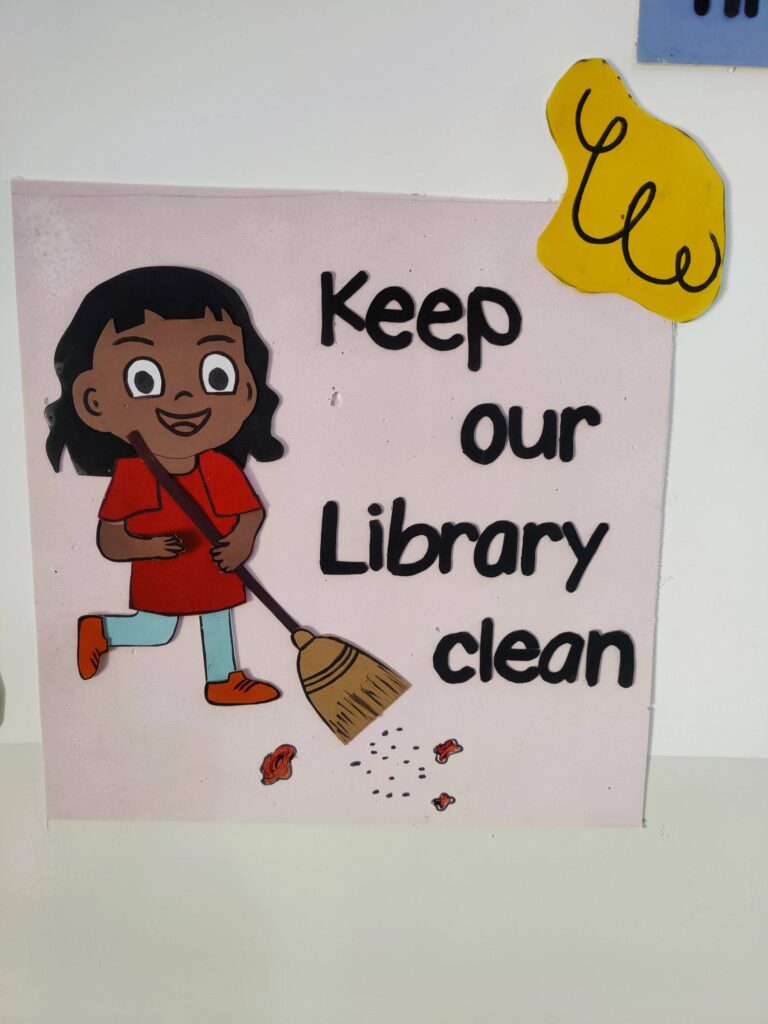
4. Keep Our Library Clean:
A clean and tidy library provides a pleasant environment for reading and learning.
Students should understand that everyone plays a role in keeping the library clean. Simple actions—such as disposing of trash in the bin, arranging books neatly on the shelves, and leaving tables clean—can make a significant difference.
This rule can be phrased in a simple, child-friendly way:
“Keep your library clean and ready for the next reader.”
Students should also understand that food and drinks can damage books and furniture. If food is not permitted in your school’s library, this can be included as an additional library rule.
Why This Rule Matters
A clean and tidy library:
- Provides a pleasant and inviting atmosphere.
- Protects books and other materials.
- Creates a better environment for study.
- Helps students focus.
- Fosters a sense of responsibility.
- Demonstrates respect for shared spaces.
A colorful “Keep Our Library Clean” poster displayed near the entrance or study area can serve as a daily reminder of this responsibility for students.
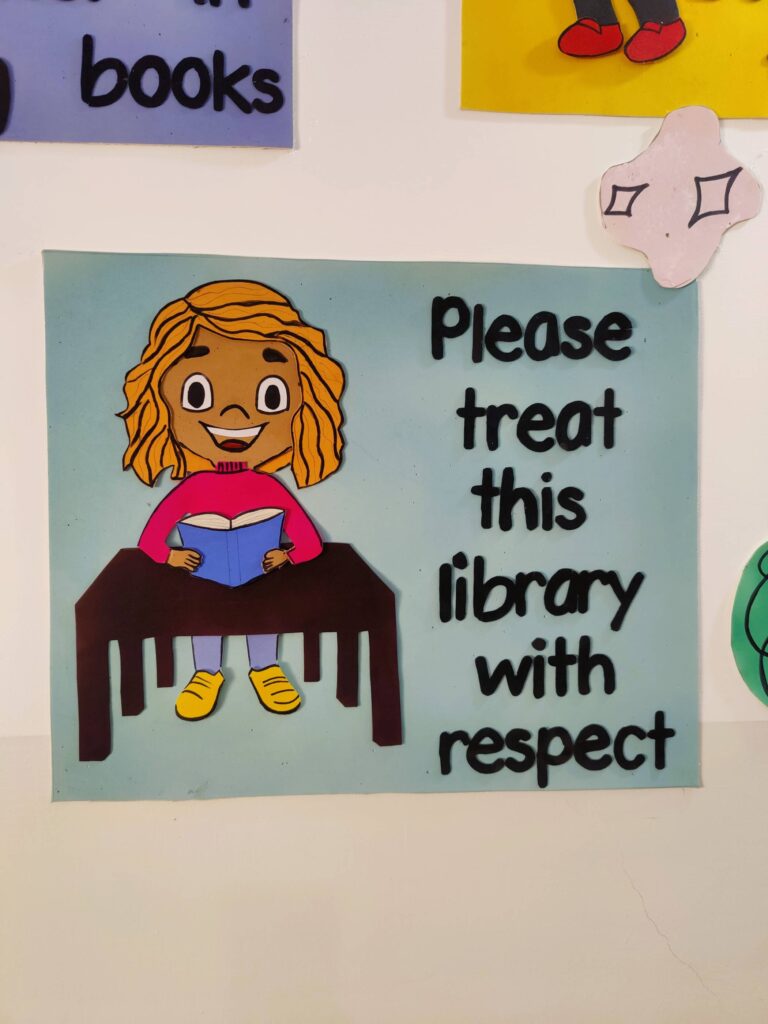
5. Please Treat This Library With Respect:
Respect is one of the most important values students can learn in the library.
Respecting the library means more than just keeping the room tidy; students should also show respect for the books, furniture, teachers, the librarian, and other readers present.
Children can demonstrate respect by handling books carefully, speaking in low voices, following library rules, and behaving courteously toward others.
A simple message can make it easy to remember this principle:
“Take care of our library so that everyone can enjoy it.”
What Does Respect Look Like in a Library?
Students can demonstrate respect in the following ways:
- Turning pages carefully.
- Keeping books away from food and drinks.
- Speaking in a low voice.
- Walking instead of running.
- Using furniture carefully.
- Listening attentively to the librarian or teacher.
- Allowing other students adequate space (or quiet) to study.
- Waiting patiently when someone else is using a facility or a book.
Teachers can discuss examples of respectful and disrespectful behavior with students. This makes the rules more meaningful and effective than simply having them displayed on the wall.
How These Library Rules Benefit Students
Following library rules has many benefits for students, including:
1. Improved Learning Environment: A clean, organized, respectful library promotes focus and creativity.
2. Development of Lifelong Skills: Responsibility, teamwork, and respect are skills that benefit students throughout their lives.
3. Positive social interactions: Helping each other and respecting shared spaces build strong interpersonal relationships.
4. Increased access: Returning books on time and keeping them organized ensures that resources are available to everyone.
How to Make Your Own Library Rules Display
You do not need expensive materials to create a display of library rules.
You can use items that are already available in your classroom or art room.
Suitable materials for use
Consider using the following items:
- Colored paper
- Cardboard
- Chart paper
- Construction paper
- Foam sheets
- Fabric scraps
- Ribbons
- Buttons
- Paper flowers
- Recycled cardboard
- Paint
- Markers
- Scissors
- Glue
- Craft sticks
Choose a different color or design style for each rule, but ensure that the overall display looks harmonious and balanced.
For example, you could create five large posters and arrange them together on one of the library walls.
Other Library Rules You Can Add
The five principles outlined above provide a simple foundation, but schools may also include additional guidelines tailored to their specific needs.
Some additional library rules for students could include:
- Speak in a low voice.
- Walk carefully inside the library.
- Handle books with care.
- Do not write in library books.
- Keep food and drinks away from books.
- Ask for permission before taking a book.
- Follow the library’s book borrowing procedure.
- Listen carefully to the librarian.
- Take care of the library furniture.
- Maintain a quiet environment for others to study.
Try not to present too many rules at once, especially for younger students. A small number of clear, positive rules are often easier for children to understand and remember.
Final Thoughts
A well-organized school library can inspire children to become enthusiastic readers and curious learners. Simple library rules for students help maintain this environment while also teaching important values such as responsibility, respect, cooperation, and discipline.
Our five simple library rules are based on habits that every student can easily understand:
- Return books to their designated places (shelves)
- Help each other find books
- Return your library book on time
- Keep your library neat
- Please respect the library
Displaying these rules on colorful, handmade posters makes them both practical and visually appealing. Teachers can create these posters themselves or involve students in their design and production.
The best library rules are not merely lists of instructions posted on a wall; rather, they serve as a daily reminder that every student plays a role in caring for this shared space.
When children learn to respect books, help one another, keep their environment tidy, and take responsibility for borrowed items, they are cultivating habits that can stay with them for years.
The library is a shared asset. When we take care of our library, everyone can enjoy it.



Pingback: Library Wall Art to Inspire and Welcome Students - 1thousandideas
Pingback: Preschool Library Ideas: Create a Magical Reading Space - 1thousandideas
Hi there! This article could not be written any better!
Looking through this post reminds me of my previous roommate!
He constantly kept talking about this. I am going to send this
information to him. Fairly certain he will have a great read.
Thanks for sharing!
That’s so nice of you to say — I hope your friend likes it too!
I’m amazed, I must say. Seldom do I encounter a blog that’s both educative and entertaining, and let me tell you, you have hit the nail on the head. The problem is something not enough men and women are speaking intelligently about. Now i’m very happy I stumbled across this in my search for something relating to this.
very nice put up, i definitely love this website, carry on it