

Teaching size concepts, such as big and small, is one of the most important early math and thinking skills for young children. Preschoolers love learning when it’s visual, colorful, and hands-on, and worksheets are a great way to make learning fun and meaningful.
To help children clearly understand the difference between big and small, I have created 7 engaging worksheets that focus on coloring, circling, matching, and size recognition. These worksheets are specifically designed for preschool, kindergarten, and early learners.
In this blog post, I will explain each worksheet, how it helps children learn, and how teachers and parents can use them effectively at home or in the classroom.
All worksheets are available as a FREE PDF printable, making them easy to download and use at home or in the classroom.
Why Teaching “Big and Small” Is Important for Preschoolers
Before children can learn numbers, measurements, or comparisons, they first need to understand basic concepts of size. Learning big and small helps children:
- Develop early math skills.
- Improve observation and comparison skills.
- Develop vocabulary.
- Strengthen fine motor skills
- Prepare for future topics, such as measuring, sorting, and ordering.
Using worksheets that include coloring, matching, and circling makes learning fun and stress-free for young learners.
About My Big and Small Worksheet Set
This free printable PDF worksheet pack includes 7 different worksheets, each focusing on size recognition in a different way. The activities move from simple recognition to matching and sorting, making them perfect for step-by-step learning.
Benefits of the Free PDF:
- Easy to download and print
- Black-and-white friendly
- Perfect for classroom or home use
- No preparation required
These worksheets are suitable for:
- Preschool
- Kindergarten
- Nursery
- Homeschooling
- Early Years Classrooms
Worksheet 1: Color According to the BIG and SMALL Tags
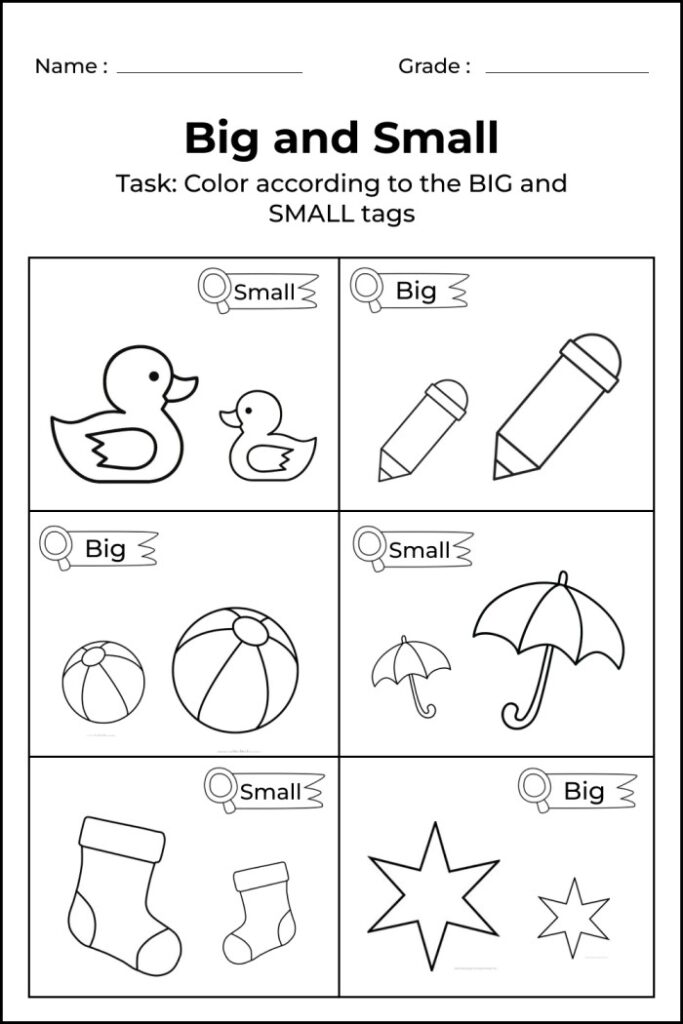
Description:
In this worksheet, children are given pictures labeled with large and small tags. The child must look at each picture carefully and color it according to the size label.
Learning Benefits:
- Helps children read and understand size words.
- Encourages visual discrimination.
- Improves color recognition.
- Develops focus and attention.
Teaching Tip:
Before you begin, read the words BIG and SMALL out loud. Ask the children questions like:
- “Which one looks bigger?”
- “Can you find the smaller one?”
Worksheet 2: Color the Big Picture
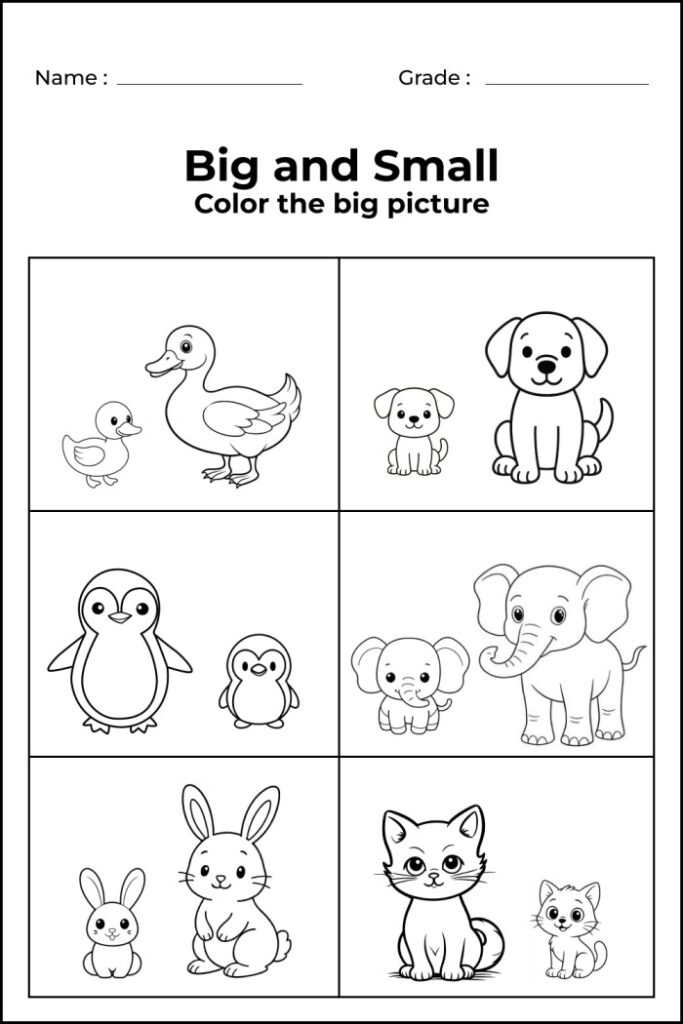
Description:
This worksheet asks children to identify and color only the larger picture in each set. The smaller picture is left uncolored.
Learning Benefits:
- Strengthens comparison skills.
- Improves decision-making.
- Children develop confidence when they choose the correct answer.
Teaching Tip:
Encourage children to point at the pictures before coloring and say, “This is BIG.”
Worksheet 3: Color the Small Picture
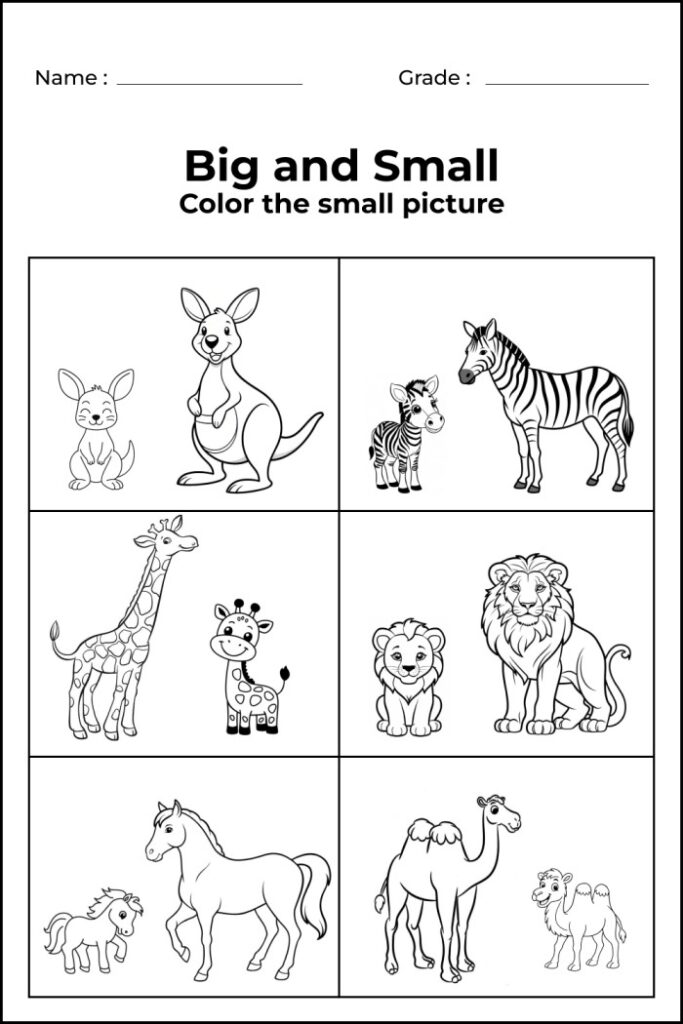
Description:
In this activity, children color only the small picture of each pair or group.
Learning Benefits:
- Reinforces the concept of small size.
- Enhances hand-eye coordination.
- Encourages careful observation.
Teaching Tip:
Use real objects (such as a large ball and a small ball) before the worksheet to make learning more concrete.
Worksheet 4: Circle the Small Picture
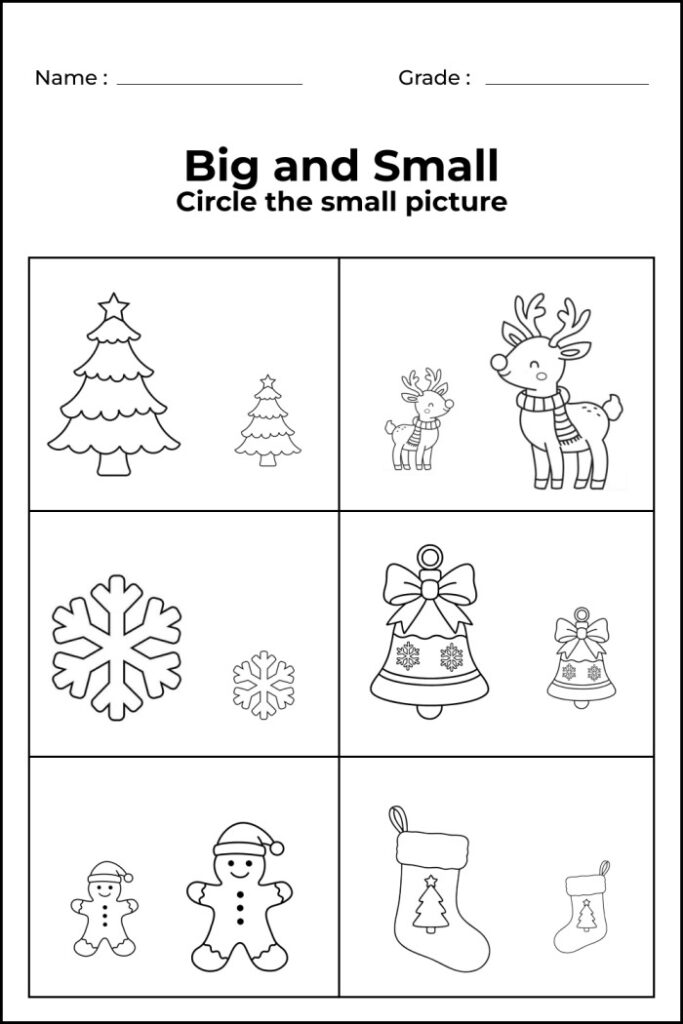
Description:
Instead of coloring, children are asked to circle the small picture in each group.
Learning Benefits:
- Develops fine motor control.
- Helps children practice controlled pencil movements.
- Strengthens size comparison skills.
Teaching Tip:
Show the children how to draw a clean circle around the picture before they begin.
Worksheet 5: Circle the Big Picture
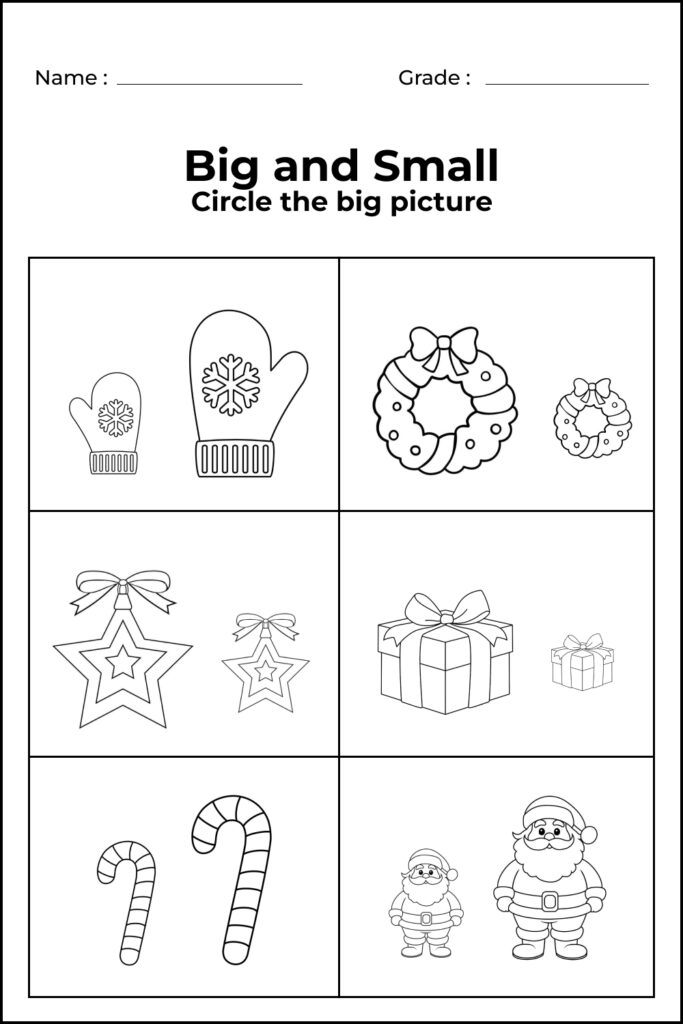
Description:
In this worksheet, children should circle the larger picture from each set.
Learning Benefits:
- Improves visual scanning.
- Builds early math reasoning.
- Encourages accuracy and patience.
Teaching Tip:
- Ask the children to explain their choice:
- “Why do you think it’s big?”
Worksheet 6: Match the Big Picture with the Small Picture
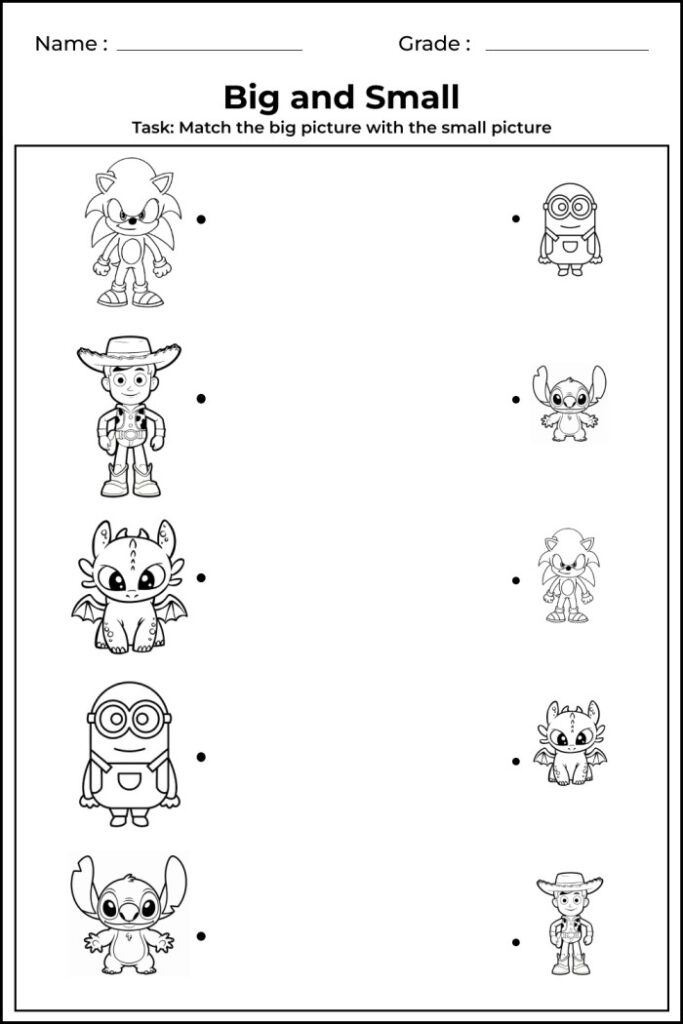
Description:
Children match a larger picture to its smaller version by drawing a line between them.
Learning Benefits:
- Enhances matching and pairing skills.
- Promotes logical thinking.
- Improves hand control.
Teaching Tip:
Let children trace the line slowly to avoid crossing lines and improve coordination.
Worksheet 7: Big or Small? Let’s Color Them All!
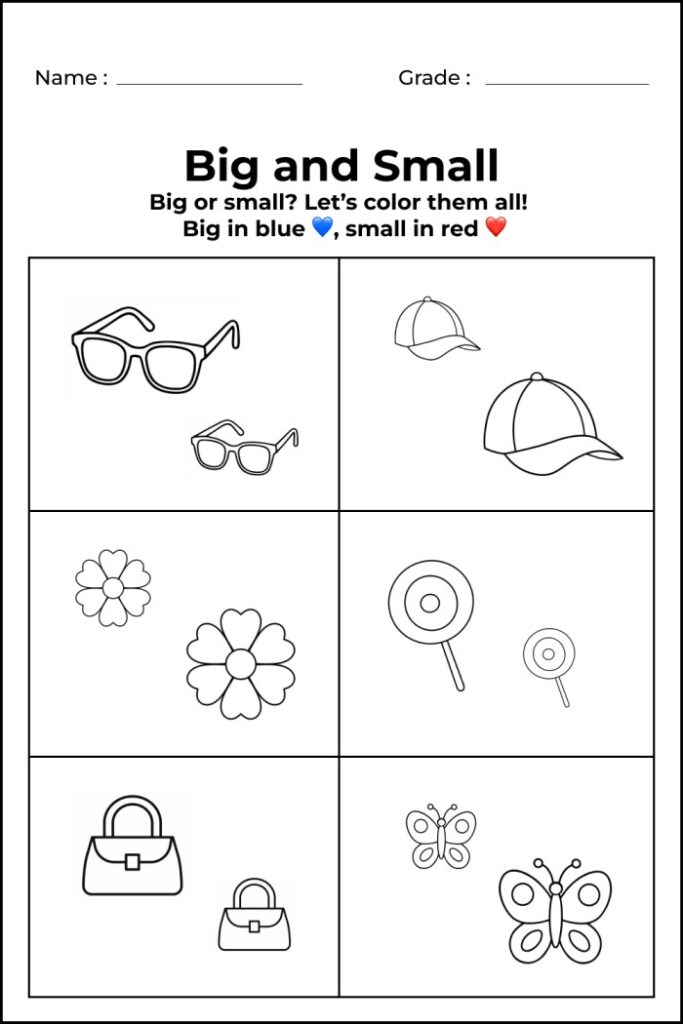
Description:
This is a fun and colorful worksheet where children identify shapes and color them using a simple rule:
- Larger images in blue 💙
- Smaller images in red ❤️
Learning Benefits:
- Clearly reinforces concepts of size.
- Improves color association.
- Makes learning interesting and playful.
Teaching Tip:
Before you start, repeat the rule out loud together:
“Big is blue, small is red!”
How These Worksheets Help Overall Development
These worksheets support multiple areas of learning simultaneously:
Cognitive skills
- Comparing
- Sorting
- Identifying differences
Fine motor skills
- Coloring
- Circling
- Draw lines
Language development
- Learning new words: big, small, big, little
- Following instructions
Creativity
- Freely using colors
- Enjoying visual learning
How Teachers Can Use These Worksheets in Class
- Use them during math time.
- Include them in activity centers.
- Send them out as home practice.
- Use them for assessments.
How Parents Can Use These Worksheets at Home
- Practice during playtime.
- Associate worksheets with real objects.
- Praise children for effort, not just accuracy.
- Keep sessions short and fun.
Why These Big and Small Worksheets Are Perfect for Preschoolers
- Easy instructions
- Kid-friendly images
- Step-by-step learning
- Fun coloring activities
- Suitable for all learning levels
Final Thoughts
Understanding small and big is an important milestone in early childhood education. This free PDF printable worksheet set offers a clear, well-structured, and fun way for children to learn size concepts through hands-on activities.
Carefully designed to support early thinking, observation, and fine motor development, each worksheet encourages children to look closely, compare objects, and independently follow simple instructions. These activities help build focus and confidence while keeping learning light and engaging.
With 7 thoughtfully designed worksheets, children practice size recognition through coloring, circling, and matching, making the learning process both effective and fun. Ideal for classrooms, homeschooling, or extra practice at home, this printable resource helps lay a strong foundation for future math and problem-solving skills.
🌟 Download the free PDF, print it, and support your child’s learning with confidence! 🌟


Ahaa, its nice conversation concerning this post here at this weblog, I have read all that, so at this time me also commenting at this place.
I believe this web site contains some really fantastic information for everyone : D.